Gender transformative approaches find entry points for community discussion through religious beliefs and cultural practices that value women’s contributions to the clan, family, community and church.
Pacific Women projects ensure that gender dynamics and the implications of unequal gender relations are made visible and included in community and organisational discussions. They facilitate discussions on the values underlying customs and help communities to reconsider how those values can be acted on in the modern context in a way that promotes gender equality.
In some situations, it has been effective not to judge widely-held beliefs or practices as wrong. In the cases of belief in the payment of bride price and harsh parenting practices, partners have approached the issues in ways that encourage women and men either to rethink the beliefs and practices and their consequences, or to reflect on positive or supportive aspects the practices may have initially served for families and communities. The projects then support women and men to consider actions to minimise harm and to identify alternative behaviours that would result in better outcomes for women, girls, families and communities.
Projects can engage with customs and practices by:
a. Identifying positive values and practices. This involves supporting communities or organisations to identify actions consistent with the positive values and interests that will support women’s access to resources and services, promote women’s contributions in public and private spheres, and minimise harm.
b. Challenging negative behaviours, justified in the name of custom. This can be done by facilitating reflection on the negative gendered consequences of some existing customary practices,
by helping communities consider how customs or practices have changed and can change over time, and demonstrating the benefits of greater gender equality.
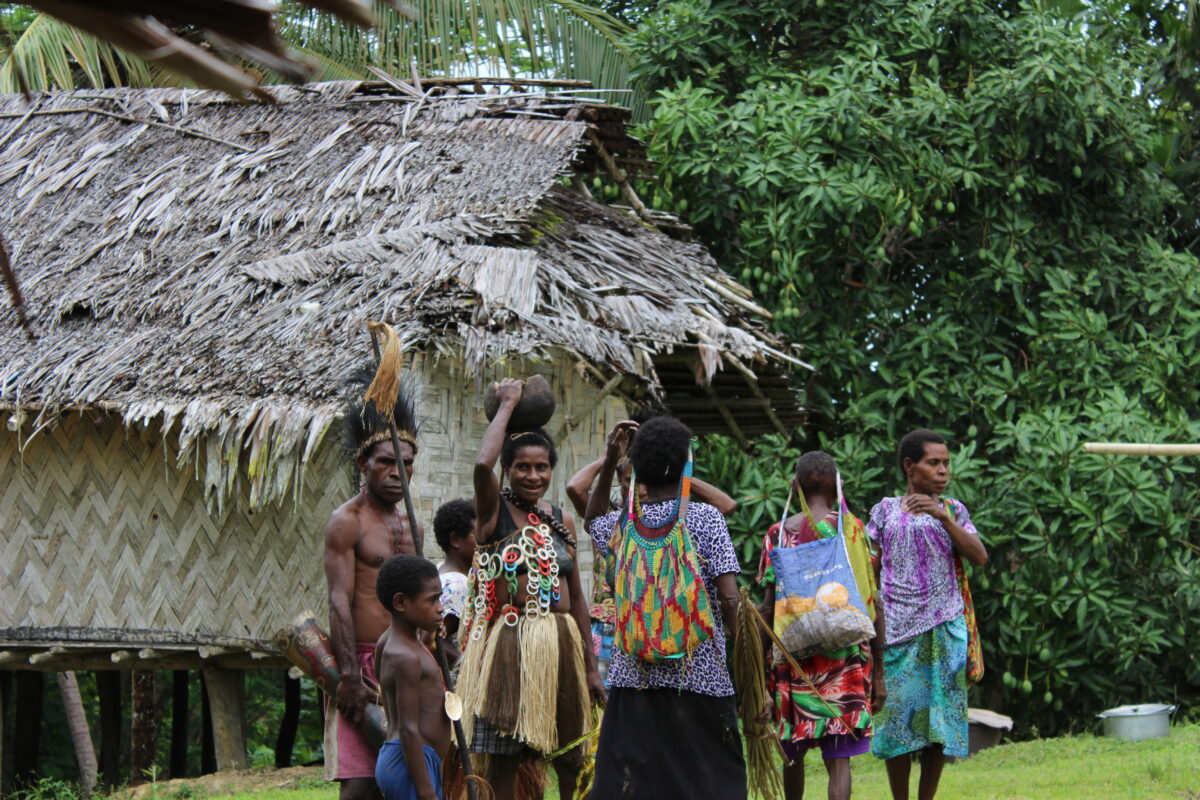
Enabling discussion on cultural norms
As part of CARE PNG’s work with coffee farming families, participants consider the issue of bride price as part of the family business management training.
Family groups typically identify bride price (along with other customary expenses) as a ‘want’ or discretionary expense. Ensuing discussions on the relative merit of bride price as a discretionary expense provide the opportunity for participants to think about how they value daughters, sisters and women generally in their community, the shifts in meaning through the monetisation of bride price, and the negative implications of the payment of bride price, especially for women who experience domestic violence.
These discussions often lead to reflections on the harm caused by domestic violence to families and communities and the responsibility for helping survivors. The discussions often result in communities wanting to return to the ‘true value’ of the custom, which includes setting monetary limits on cultural expenses.


