Include specific objectives, budget and monitoring activities in project designs to stop gender targets getting lost.
Gender transformation is more likely to be achieved when it is an explicit and deliberate aim of projects. The inclusion of specific objectives in project designs, with regular reflection points and monitoring processes, as well as attached budgets, mitigates against the risk of gender equality targets getting lost or subsumed in sectoral objectives.
Project designs can successfully include an explicit commitment to gender transformation by:
a. Using gender transformative frameworks or women’s empowerment frameworks that make it clear gender transformation is the goal; and which outline the different levels of action required to create the desired change. These frameworks all acknowledge that to achieve gender equality it is necessary to address barriers and strengthen factors that promote gender equality operating at individual, family, community and societal levels. They recognise the importance of informal community or social norms and formal laws, rules and policies that govern women’s and girls’ access to resources, opportunities, rights and choices.
b. Incorporating regular Not only does monitoring assess progress and effectiveness of approaches, but it also ensures that no harm is being inadvertently caused.

Farming family from Baiyer Valley, Western Highlands Province, PNG. Photo Credit: Dr Jo Caffery, Family Farm Teams Project, Centre for Sustainable Communities, University of Canberra, Australia.
Frameworks to support gender transformative approaches
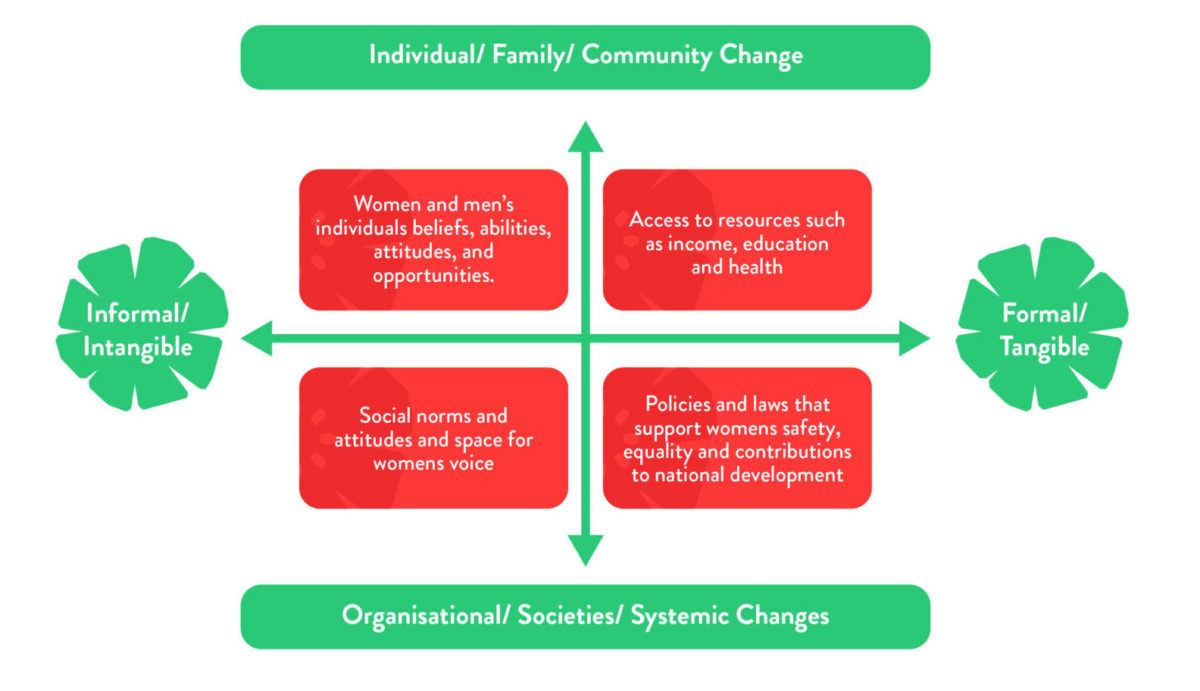
Rao and Kelleher Gender at Work Framework: This framework proposes changes in both the informal and formal rules governing experiences and opportunities; and at the different levels of individuals, within families, communities and organisations, and throughout systems.
Pacific Women gender framework adapted from the Rao and Kelleher Gender at Work framework.
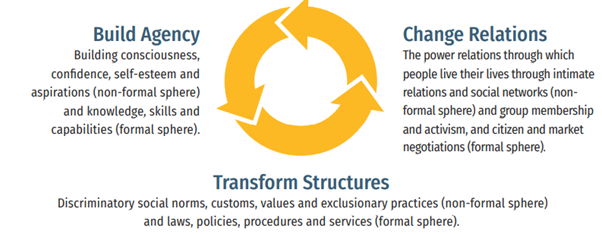
CARE Gender Equality Framework: This framework proposes changes at the personal, relational and structural levels, to ensure people of all genders and life stages can realise their full potential in their public and private lives and are able to contribute equally to, and benefit equally from, social, political and economic development.
CARE’s Gender Equality Framework.
Socio-Ecological Model: This model proposes that taking decisive actions to end violence against women and/or to promote gender equality at each of the individual, community and institutional levels will lead to positive changes in behaviours and practices in society as a whole.
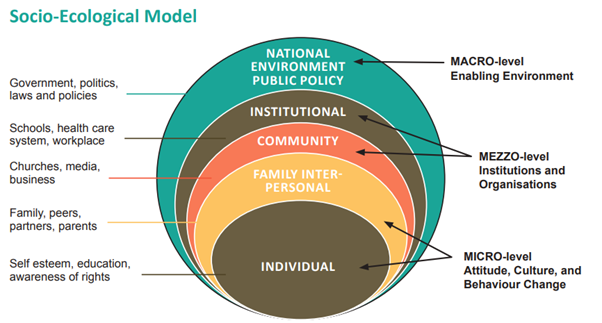
Socio-Ecological Model


