As the causes and consequences of gender inequality exist in all aspects of life, changes also need to take place in all aspects of life.
Barriers to gender equality exist at an individual level: in women’s and men’s expectations of themselves, and their personal skills and attitudes. They play out in spousal and family relationships and expectations; and in what is considered acceptable behaviour by
others – women and men – in communities and organisations. Such attitudes and expectations, though informal, govern women’s and men’s lives. The consequences of gender inequality also manifest in formal structures, such as policies and laws that enable (or not) women’s equal access to resources, services, and participation in political and community decision making.
Pacific Women partners found efforts to transform gender relations were more effective when they worked simultaneously across multiple levels.
This includes working for changes in:
- how women and men see themselves
- family dynamics at home
- the behaviour we accept in our communities, schools, organisations and workplaces
- and in the rules, systems and institutions that structure our
Projects can work effectively across multiple levels by:
a. Engaging leaders and decision makers. This is needed at structural, community and household levels to change laws, norms and practices that undermine and/or harm women and girls.
b. Transforming how women and men see themselves and their roles. Create opportunities and encourage women to take on greater leadership roles in other areas of their lives and partner with women’s groups to create support for change more broadly within communities.
c. Adopting mutually reinforcing strategies. This means combining work on individual skills with efforts to promote women’s access to resources or services; or combining financial literacy with opportunities to practise new skills through small grants or links with other credit providers.

Papua New Guinea National Parliament, Port Moresby. Photo Credit: Michael Runkel, Alamy

Coffee farming couple of Sustainable Management Services Farmer Network, Chuave District, Simbu Province, PNG (2014). Photo Credit: Coffee Industry Support Project – CARE International in PNG.
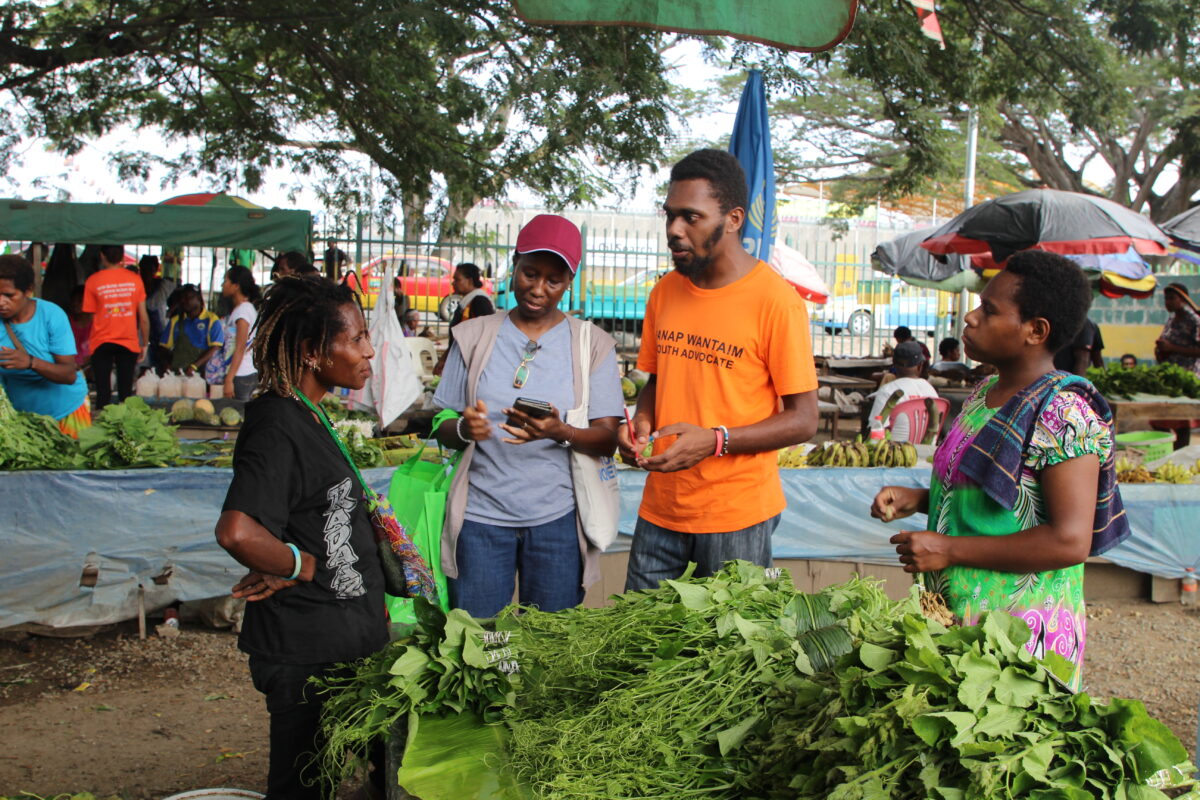
Jamie Wartovo, Sanap Wantaim male youth advocate, and Jacinta Kasozi, International United Nations volunteer engaging in discussion with a market vendor. Photo Credit: UN Women, Port Moresby, Papua New Guinea.
Working at individual and institutional levels
Adopting a multi-pronged and transformative approach to gender issues and violence against women and girls in local, informal markets resulted in a significant improvement in market management, and an increase in the safety, hygiene and comfort of vendors and customers. Incidents of ethnic violence and violence against women and girls inside participating markets declined and women’s sense of collective
power and ability to negotiate their interests increased.
UN Women’s Port Moresby: A Safe City for Women and Girls project worked to build the agency of the (mostly women) market vendors in Port Moresby to engage with city authorities in market management. This was achieved by training vendors in leadership, advocacy and financial literacy, and supporting vendors to organise into vendor associations.
At the same time, the project built the institutional environment by working with city market authorities and gender and youth desk officials to adopt more
inclusive market management and infrastructure to meet the needs of women vendors and customers. A complementary Sanap Wantaim ‘new normal’ behaviour change campaign targeted existing high rates of violence in public spaces with a positive vision of the city that was safe for women and girls and therefore safe for everyone.
The government is adopting the vendor association model as a ‘voice strategy’ to give vendors a collective and formal voice in government decision making.
The National Capital District has incorporated the Sanap Wantaim youth activities in its Gender Based Violence Strategy.


