As experts in their context – and as key change agents – staff and partners use local examples of gender power issues and develop strategies, provide training and adapt tools to local audiences.
Project implementers work with local staff and partners to deliver their programs. It is important that project implementers invest in supporting local facilitators’ knowledge of training materials, and to regularly model and promote values that help to reinforce key concepts, continue to build skills, and to maintain personal commitment. While insider-led changes are effective as a sustainability strategy, it is also necessary to maintain commitment to evidence-based methodologies and gender concepts.
Projects can include tailored gender capacity building by:
a. Co-creating and pre-testing materials and implementation tools collaboratively with local trainers. In accordance with good community development practice, this ensures key messages are accurately described in Tok Pisin, are well understood by local trainers, and that intended meanings are conveyed.
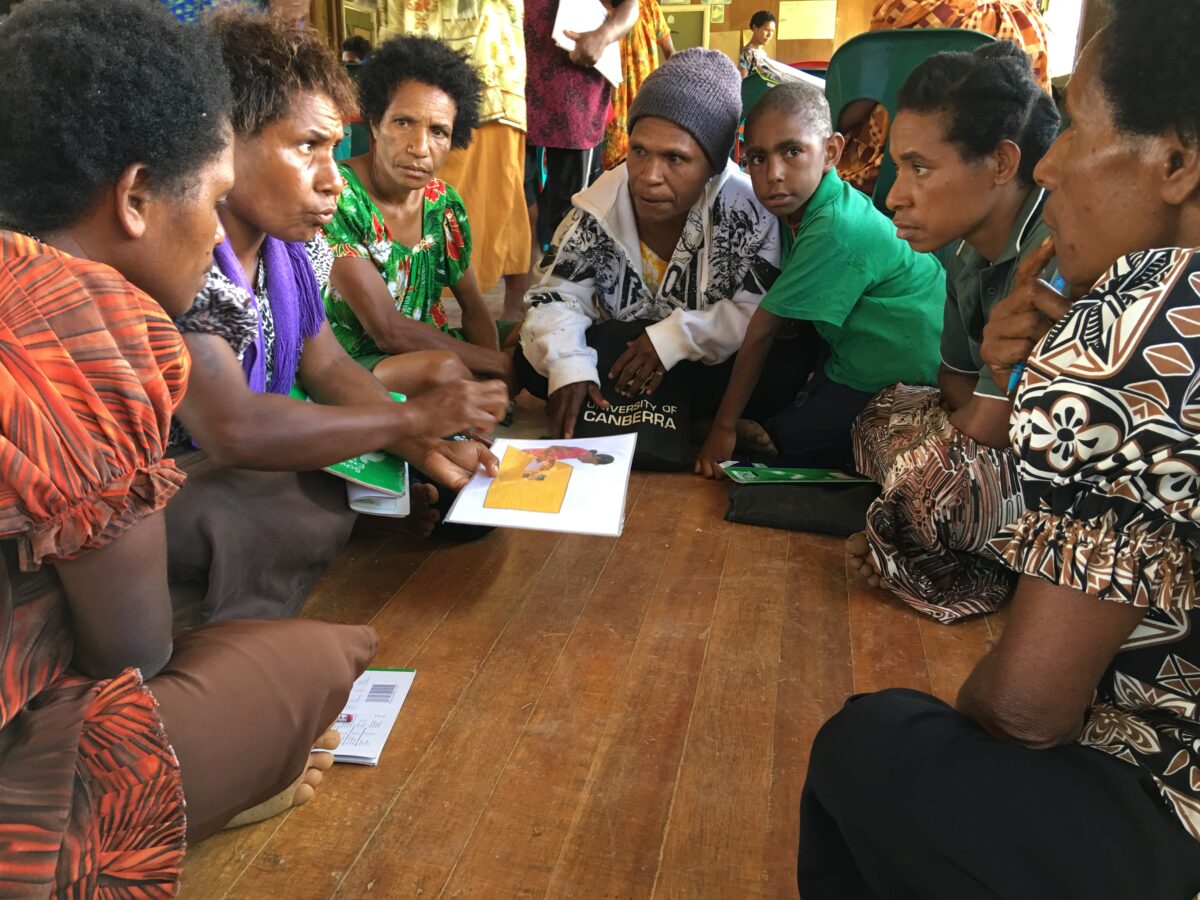
b. Contextualising picture-based materials and experiential learning tools, such as role plays and games-based training methods. These methods take into account low literacy levels. Using learning tools that require few or easily accessible local resources is effective in enabling participants to share the learning with others in their family or community.
c. Designing interventions with young women and men to work as local gender equality advocates and leaders.
Adaptation of tools and materials to local context
PNG’s National Gender Based Violence Strategy identifies SASA! as ‘a notable example’ of best practice in preventing gender- based violence. Developed in Uganda, SASA! has been successfully adapted in over 20 countries. It takes a carefully structured and phased approach to community-level change. Key messages focus on the need to address the imbalance of power between women and men, girls and boys. A key element of the SASA! pilot in PNG was ensuring that core elements of the evidence-based SASA! approach were maintained during the adaptation of tools and materials to the local context. Reflecting on the process, the SASA! team reiterated adaptation is complex and iterative.
The cultural and linguistic diversity of PNG meant text needed to be translated into Tok Pisin and Motu languages and tested to ensure that the key concepts are accurately translated into the language of target communities (Tok Ples). Culturally relevant images (clothing, faces and situations) were also tested to ensure they convey the intended meaning and do not reinforce harmful gender and power stereotypes.
Technical advice from different local organisations working to prevent gender-based violence meant that project staff created tools that can be used more broadly by a range of organisations. Guidance notes for staff and implementers provide detailed explanations of intended meanings of characters and scenes to support the use of tools in explaining complex scenarios.


